Every company tells its story through numbers. Its financial statements tell it to shareholders and lenders. Its income tax return tells it to KRA once a year. Its VAT, PAYE and withholding tax returns tell it every month. Its eTIMS invoices, customs entries, payroll, bank accounts and M-Pesa tills tell it every single day. In a well-run company, all of these versions of the story agree. In most companies, they quietly drift apart.
For years, that drift went largely unnoticed until an auditor arrived. That era is over. KRA now sees your business through the same data you generate. Every eTIMS invoice reaches KRA in real time. Every withholding certificate your clients issue tells KRA what you earned. Every import is recorded at customs. From 1 January 2026, the income and expenses in every income tax return are automatically validated against these records. When your returns say one thing and KRA's data says another, the system flags the difference. When the difference cannot be explained, it becomes an assessment, often covering several years, with penalties, interest and sometimes a notice to your bank.
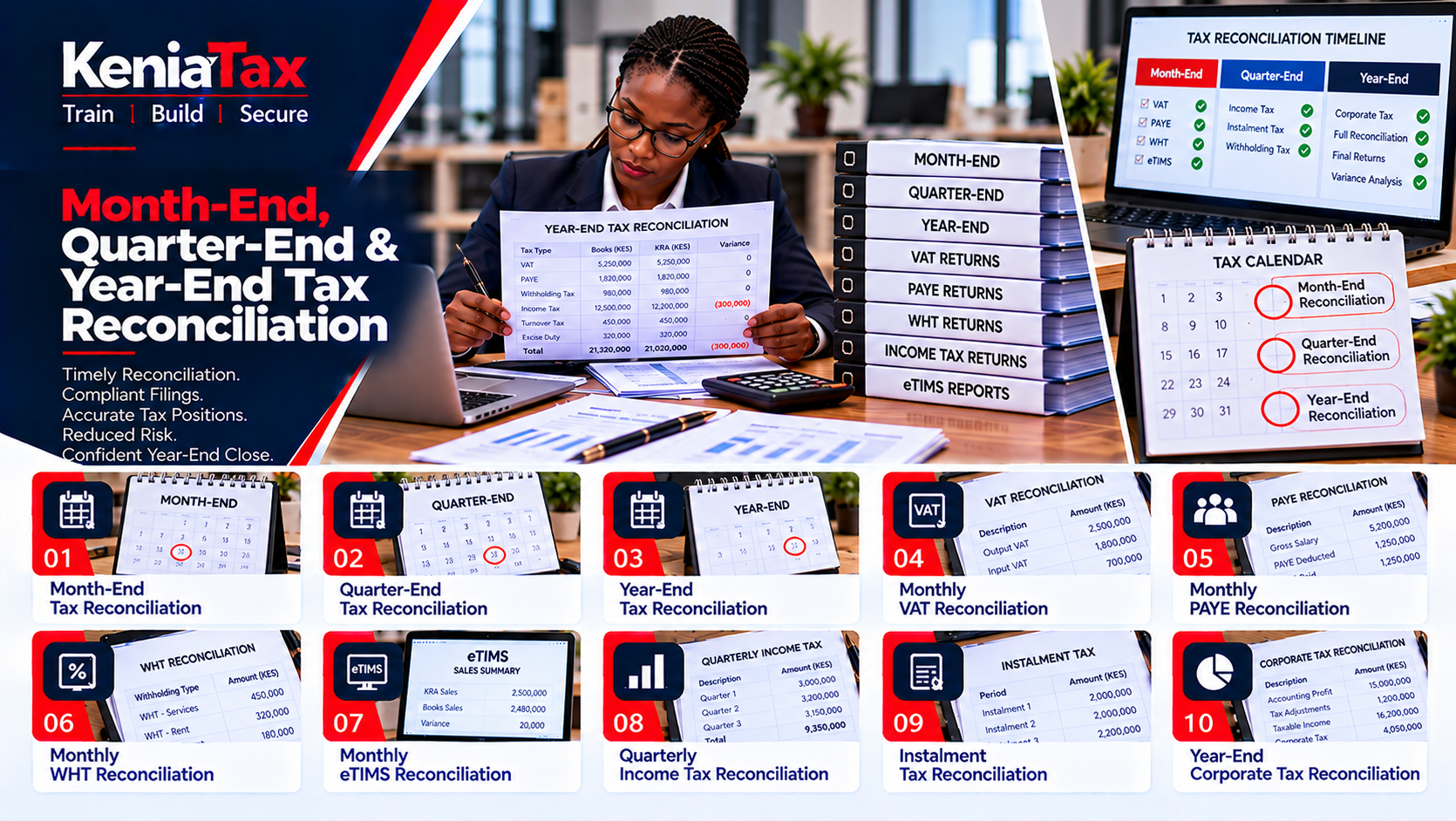
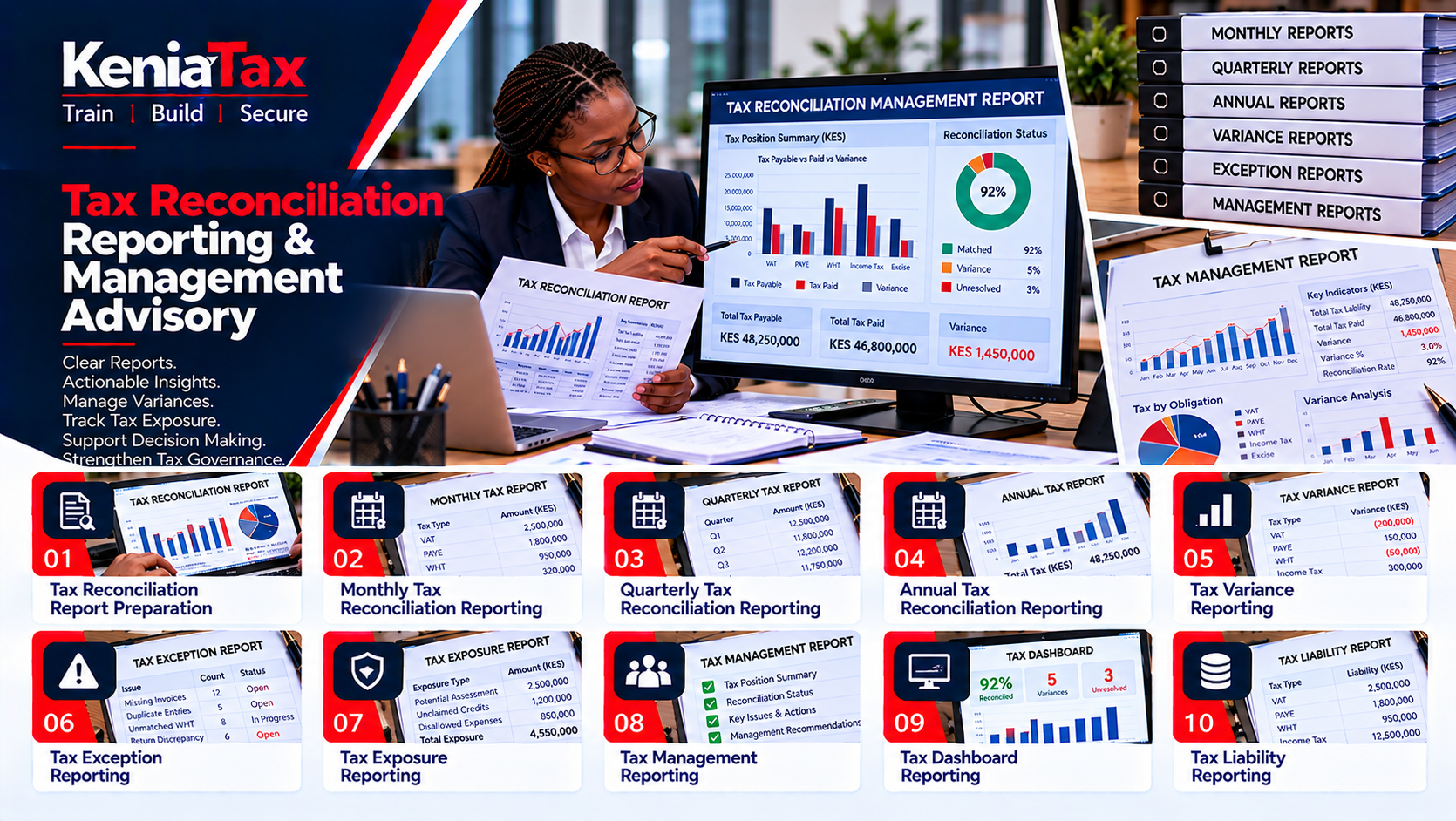
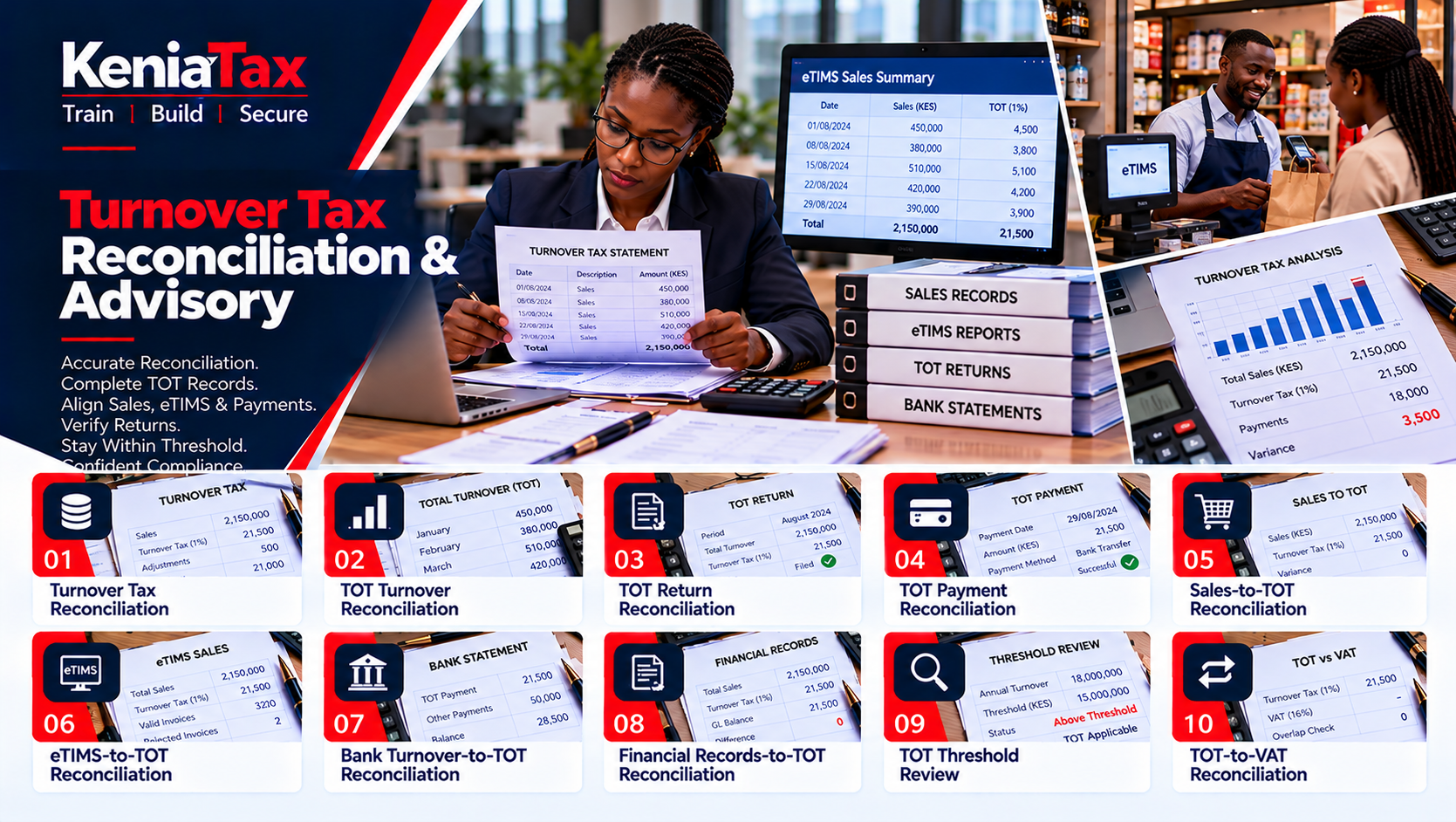
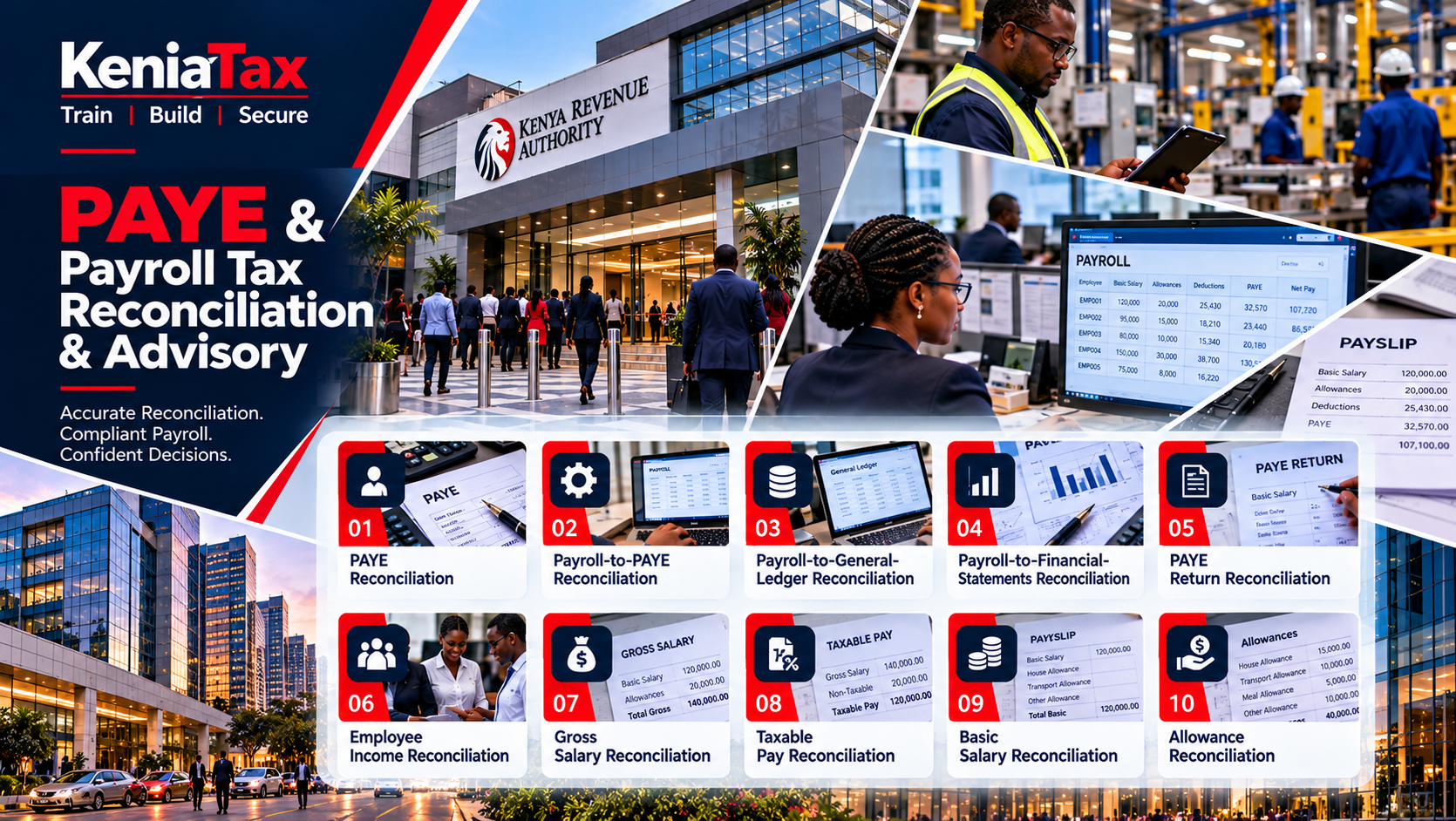
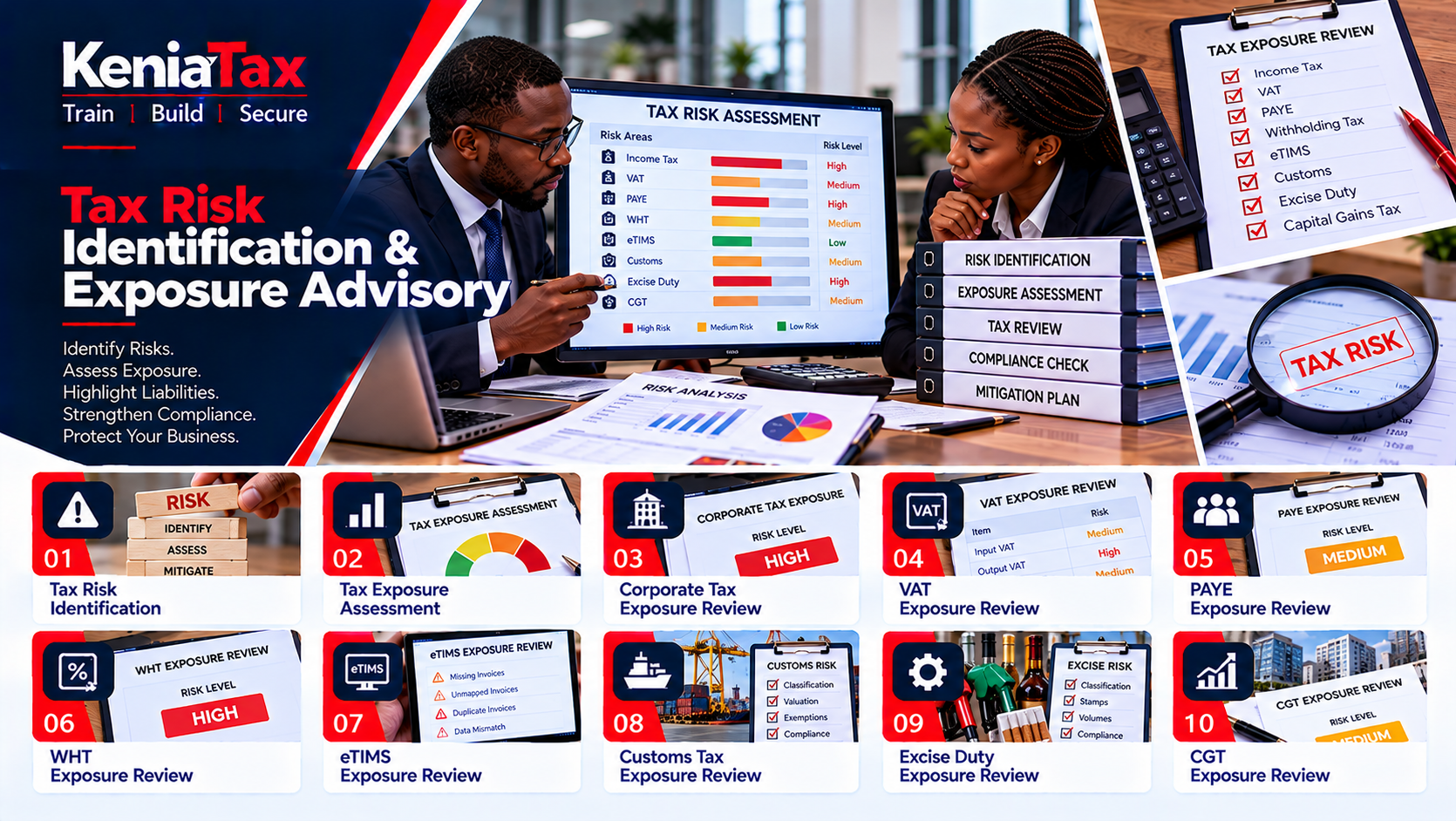
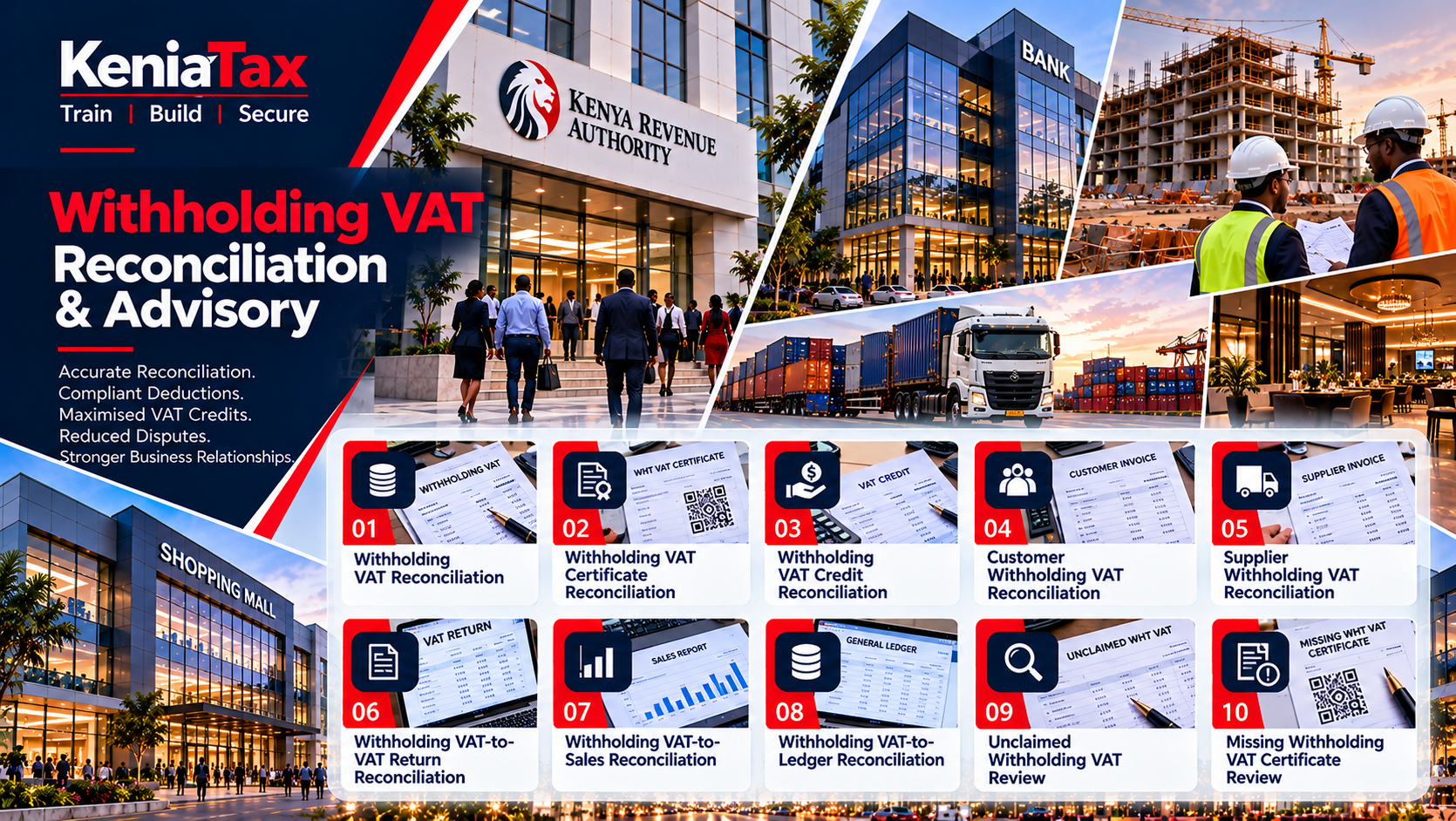
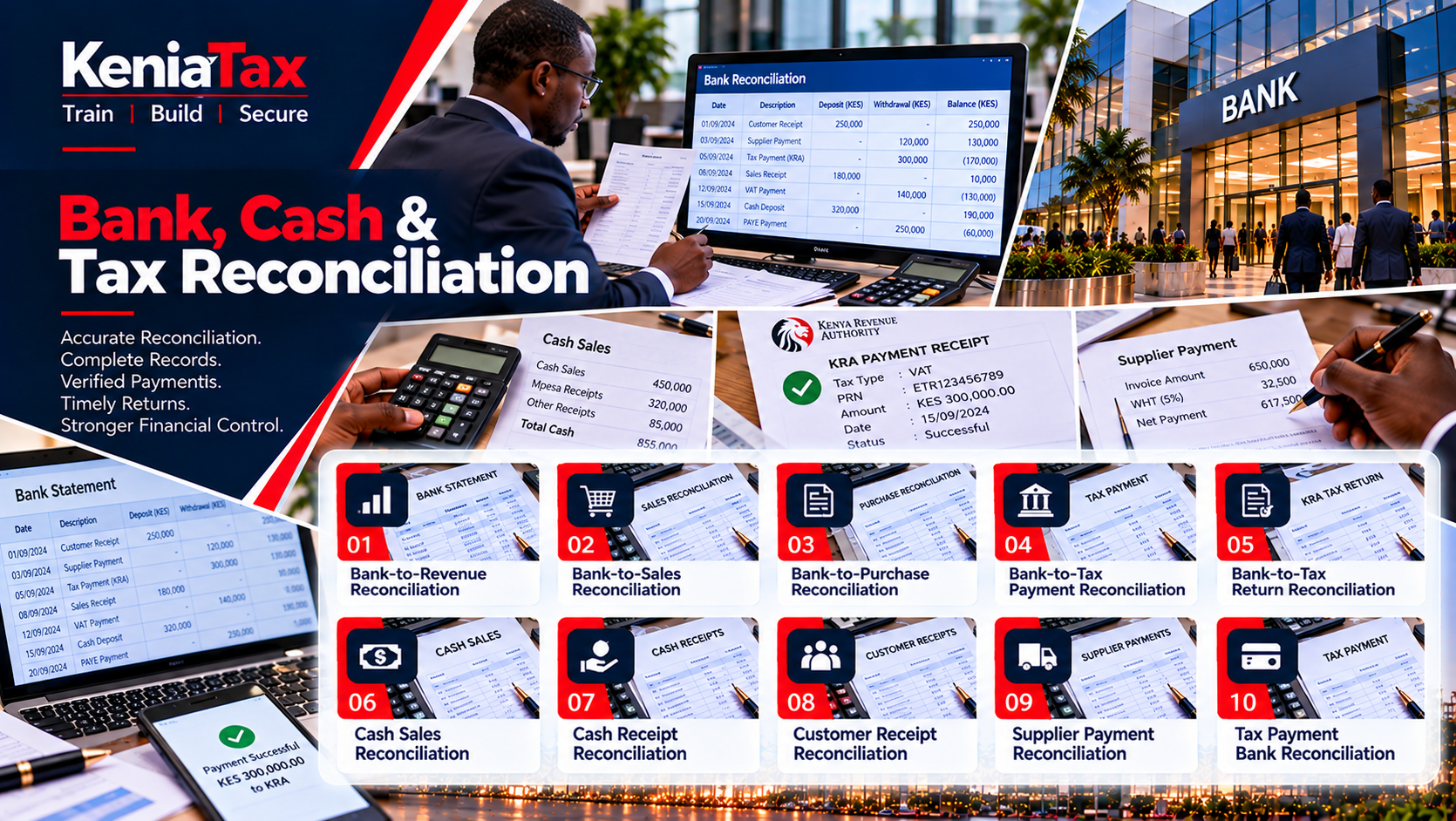
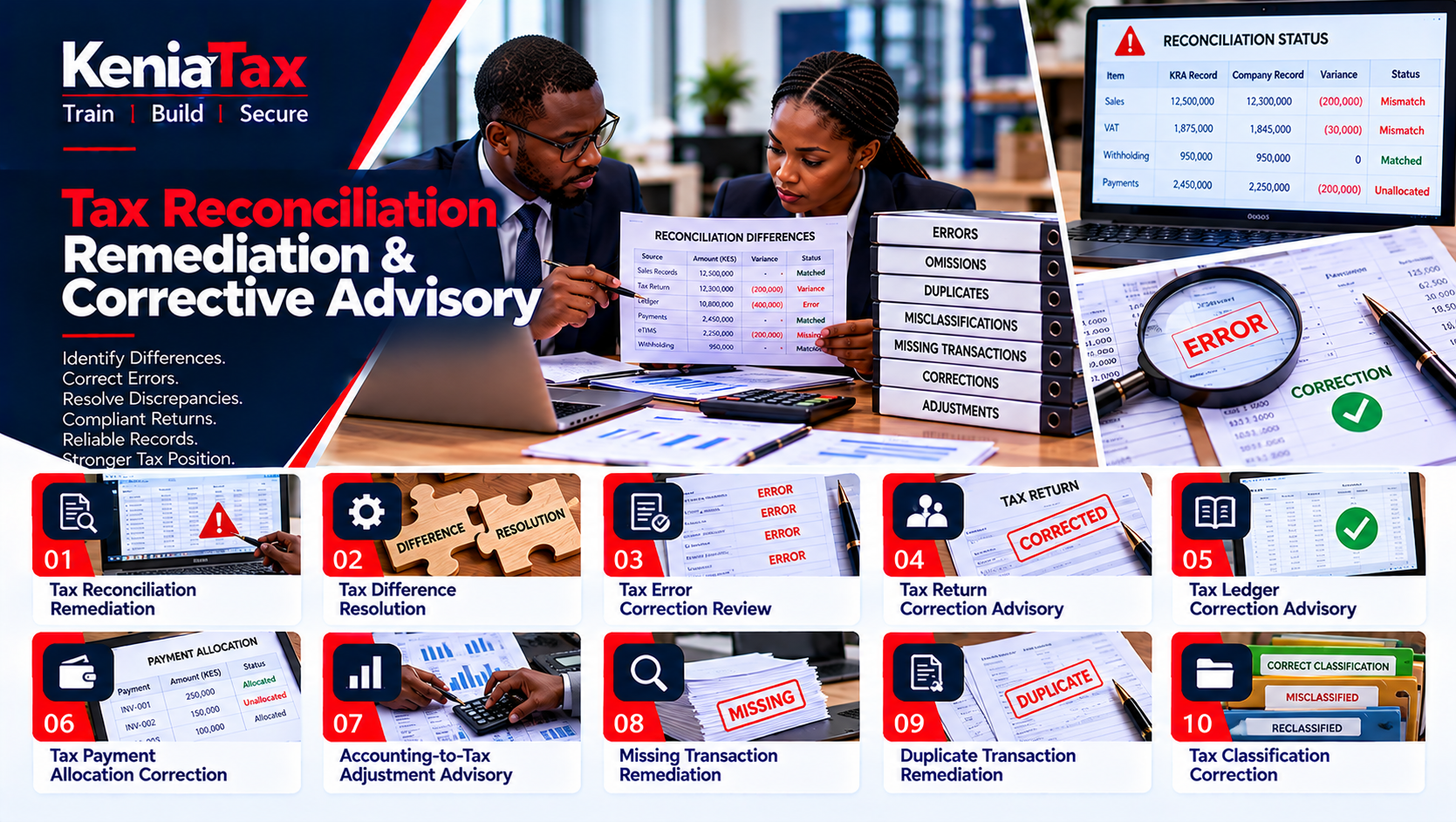
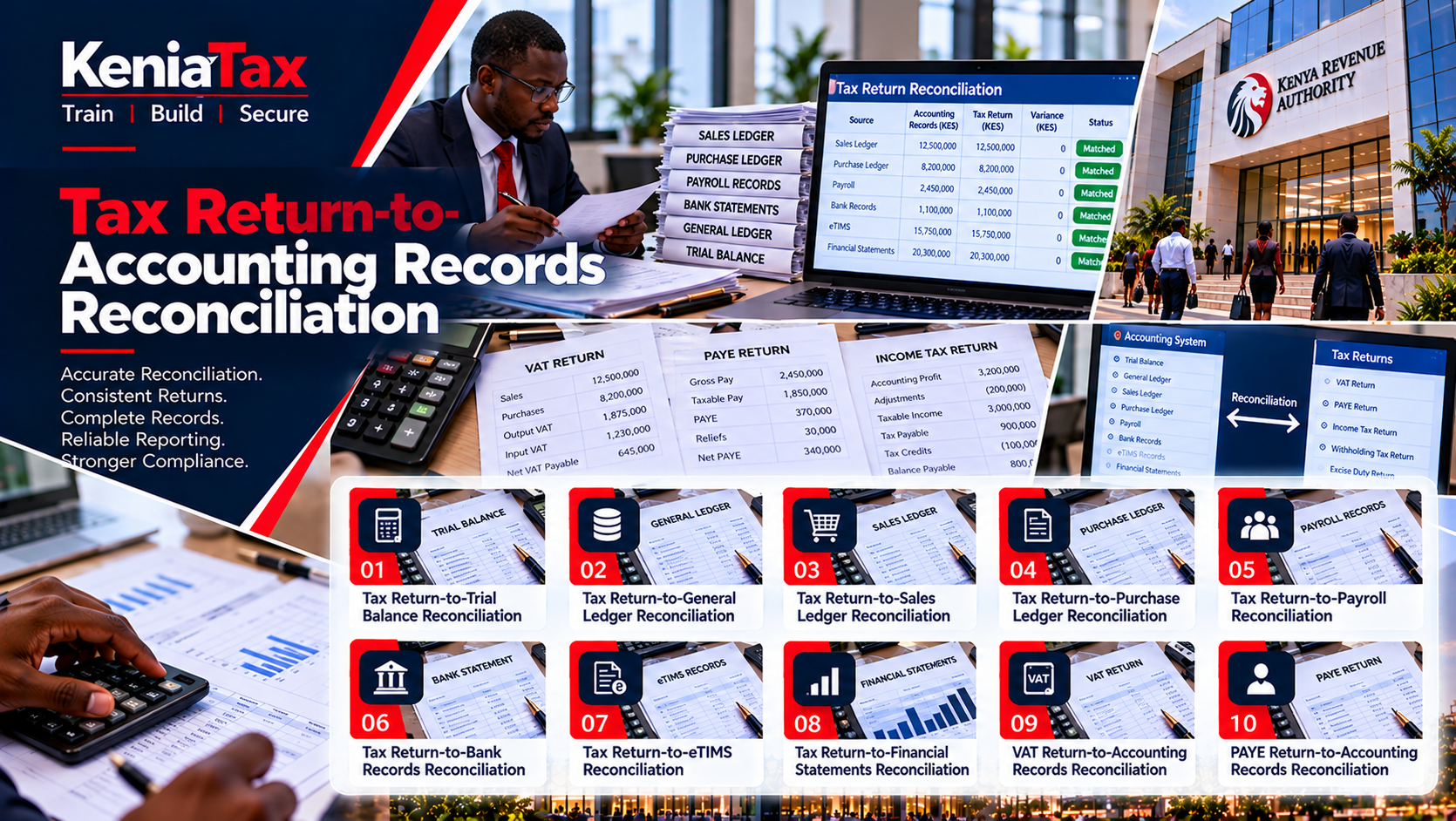
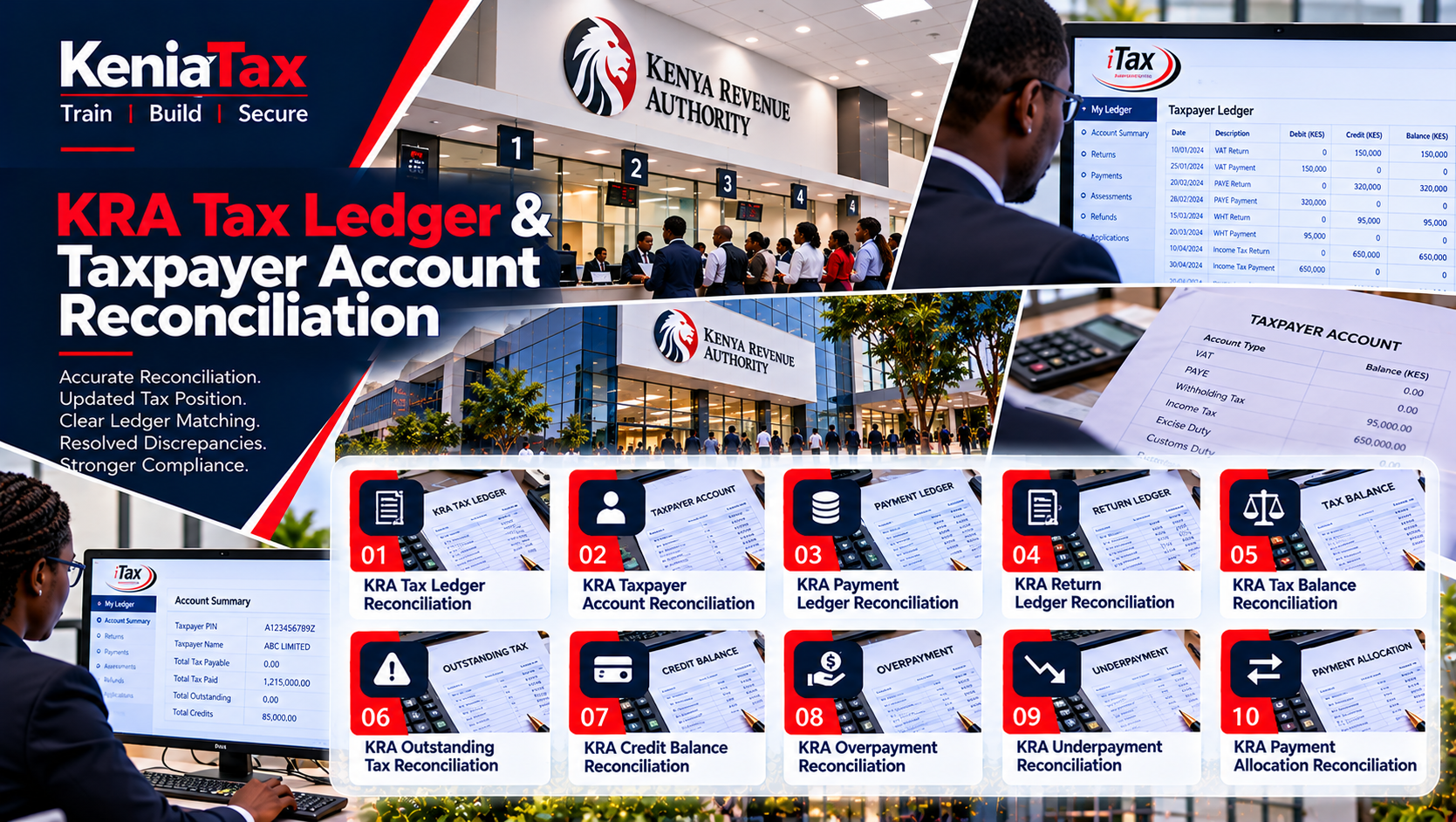
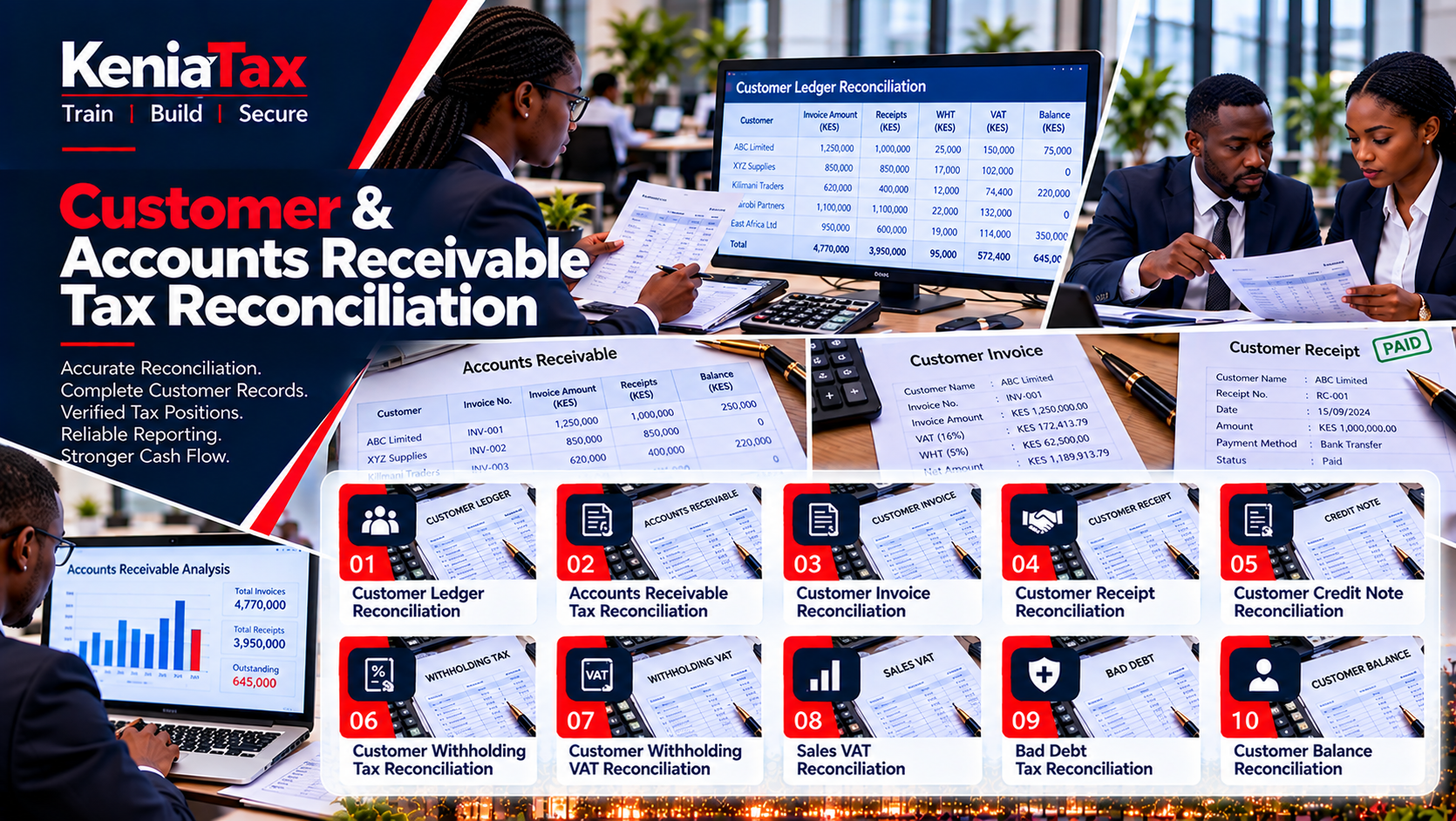
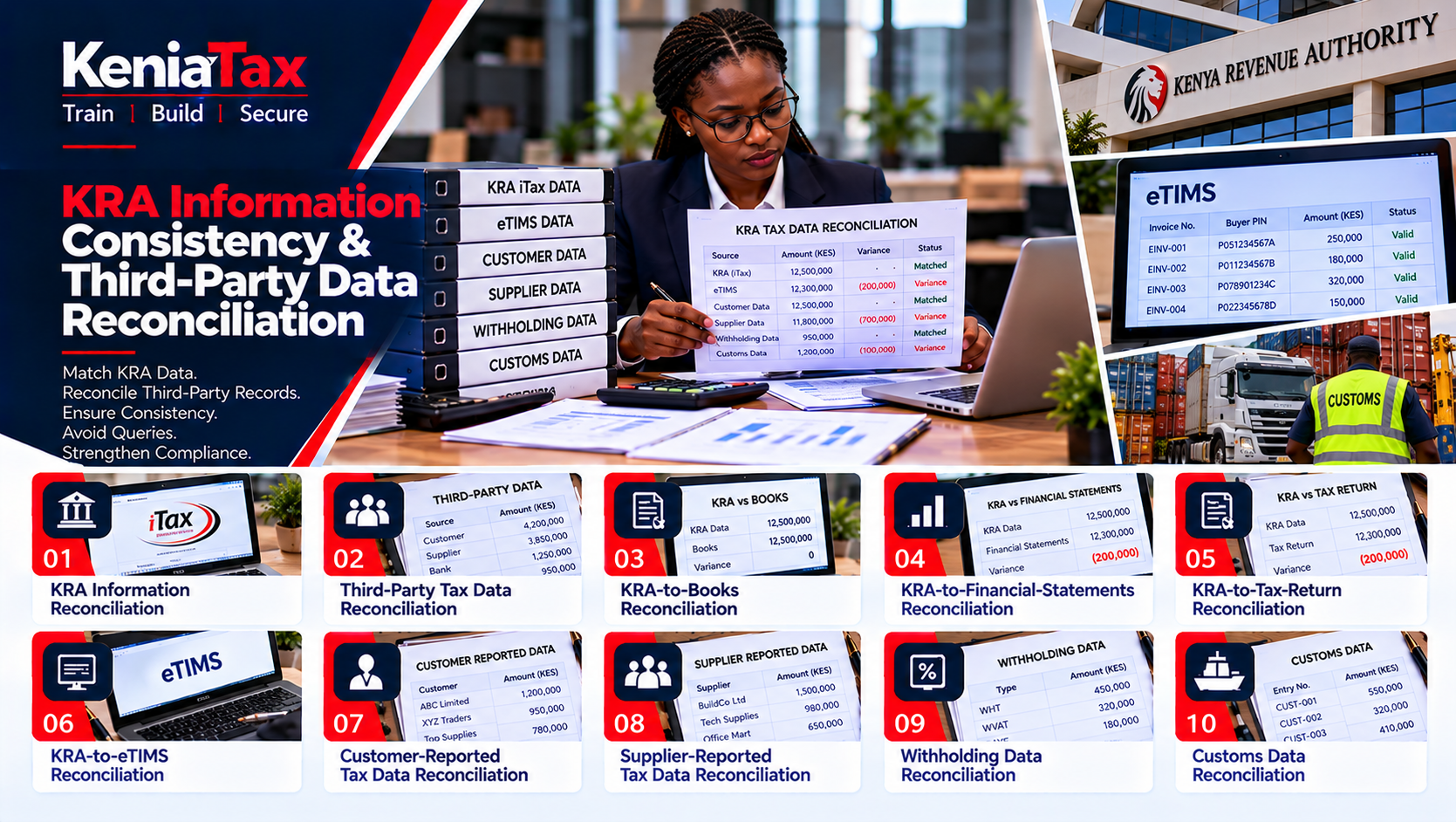
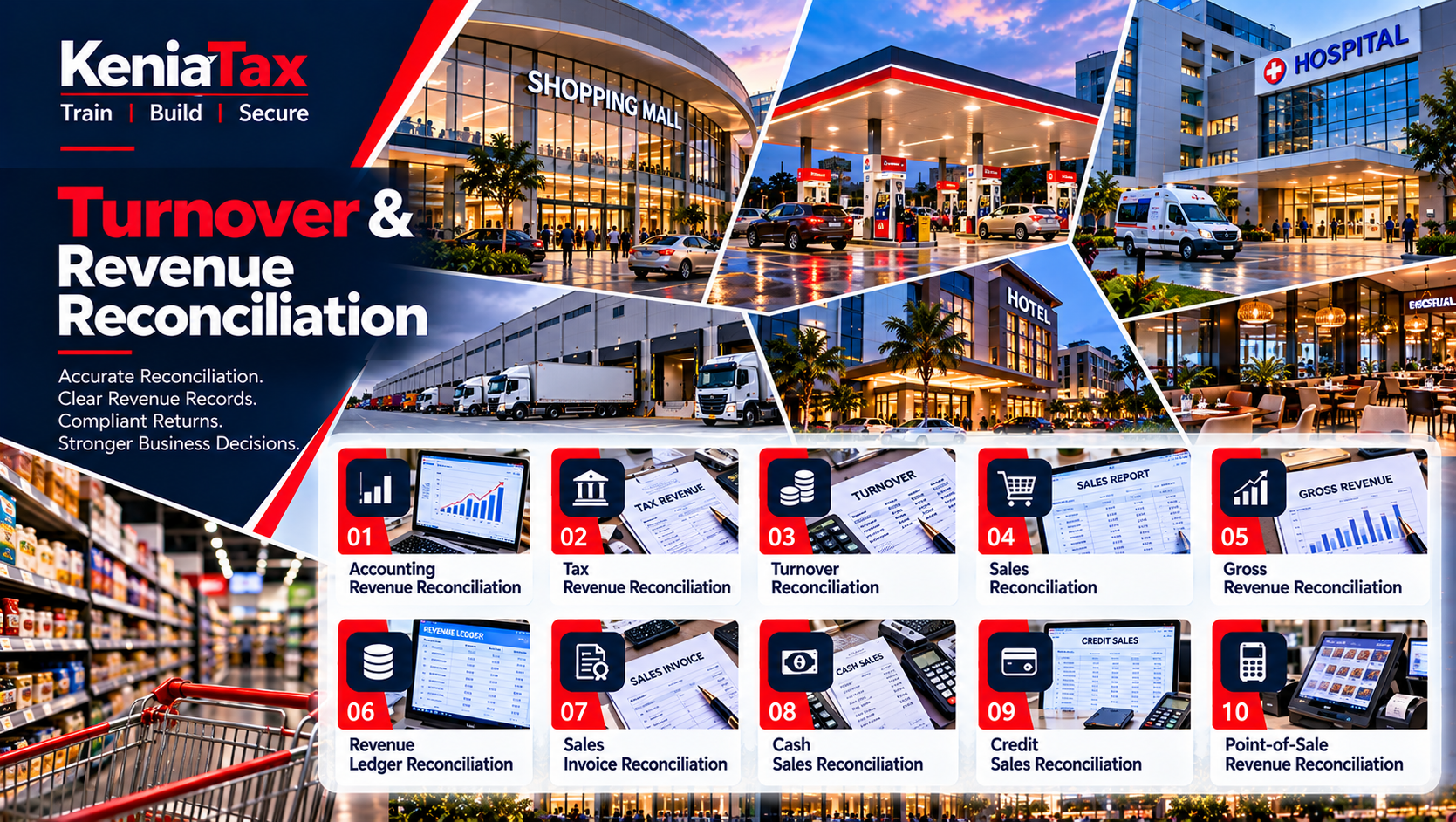
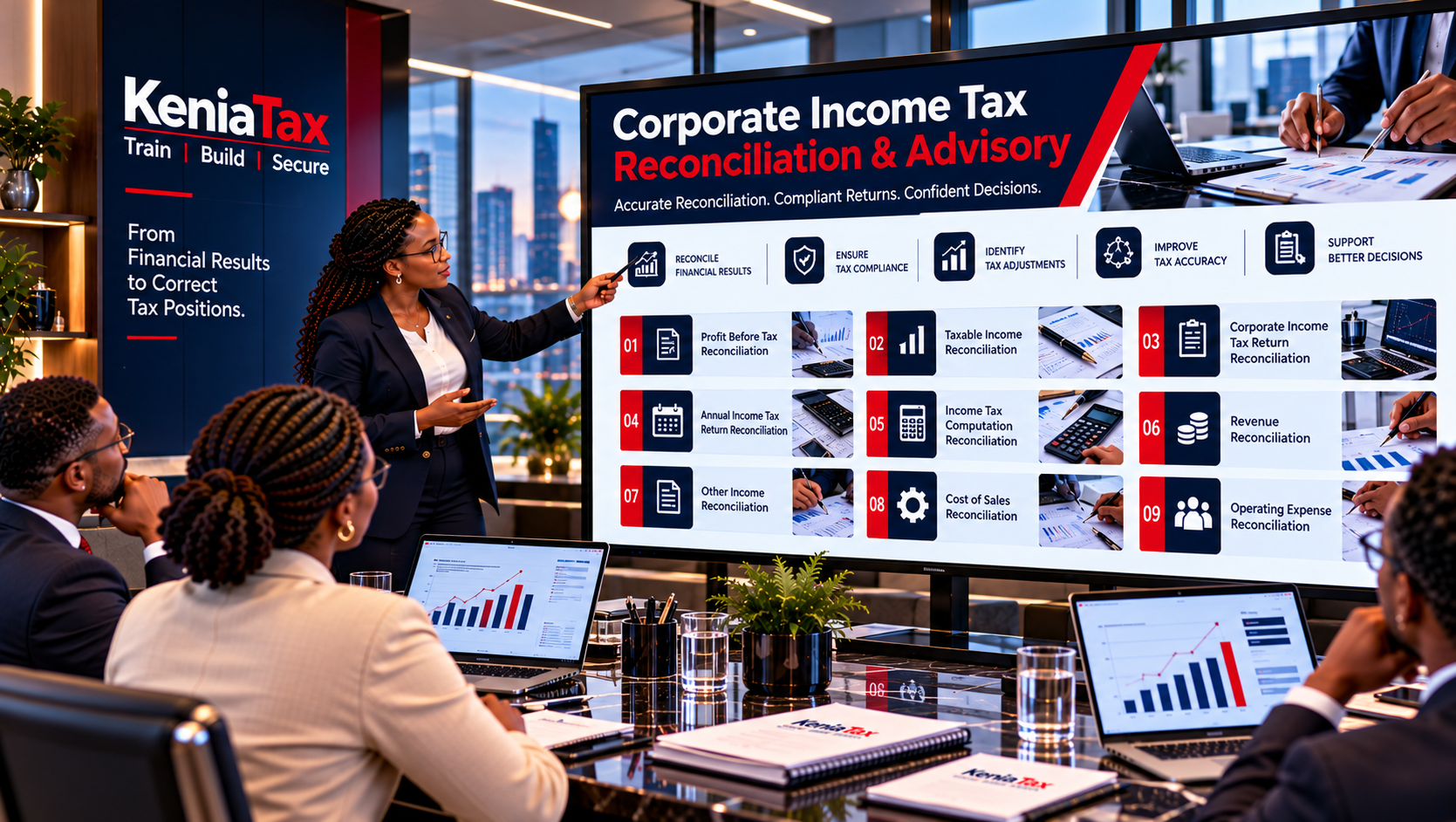
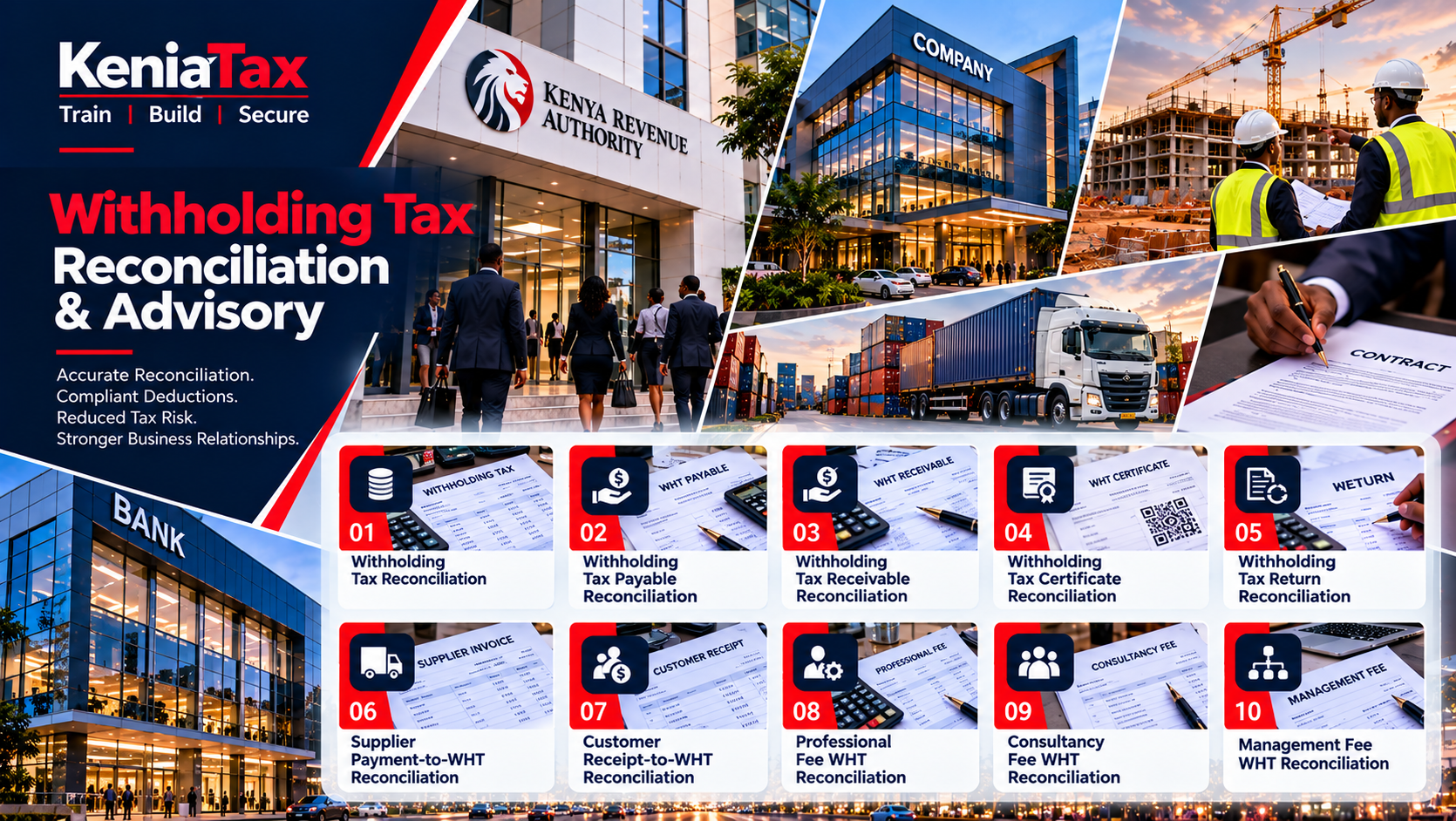
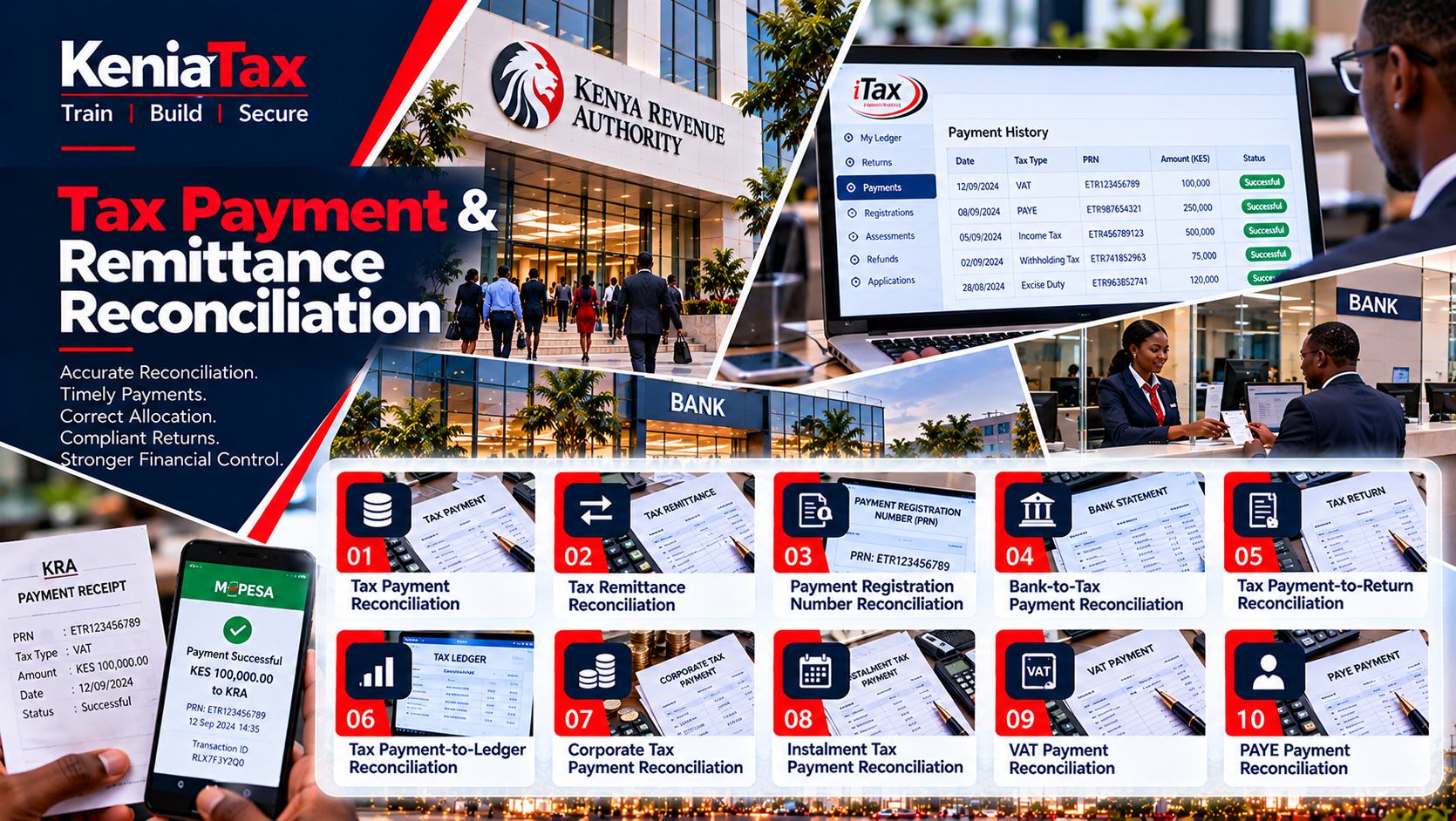
Tax Reconciliation is the discipline that keeps your company's story consistent. It means matching revenue across the accounts, VAT returns, eTIMS and bank records; matching expenses to valid invoices, withholding records and customs entries; matching payroll to PAYE; matching every certificate to the income it relates to; matching every payment to the iTax ledger; and bridging accounting profit to taxable profit line by line. Done every month, it turns tax from a year-end scramble into a controlled process. Every variance is identified while the records are fresh, explained with evidence, corrected through the proper channels where needed, and filed in a reconciliation pack that is ready the moment KRA asks.
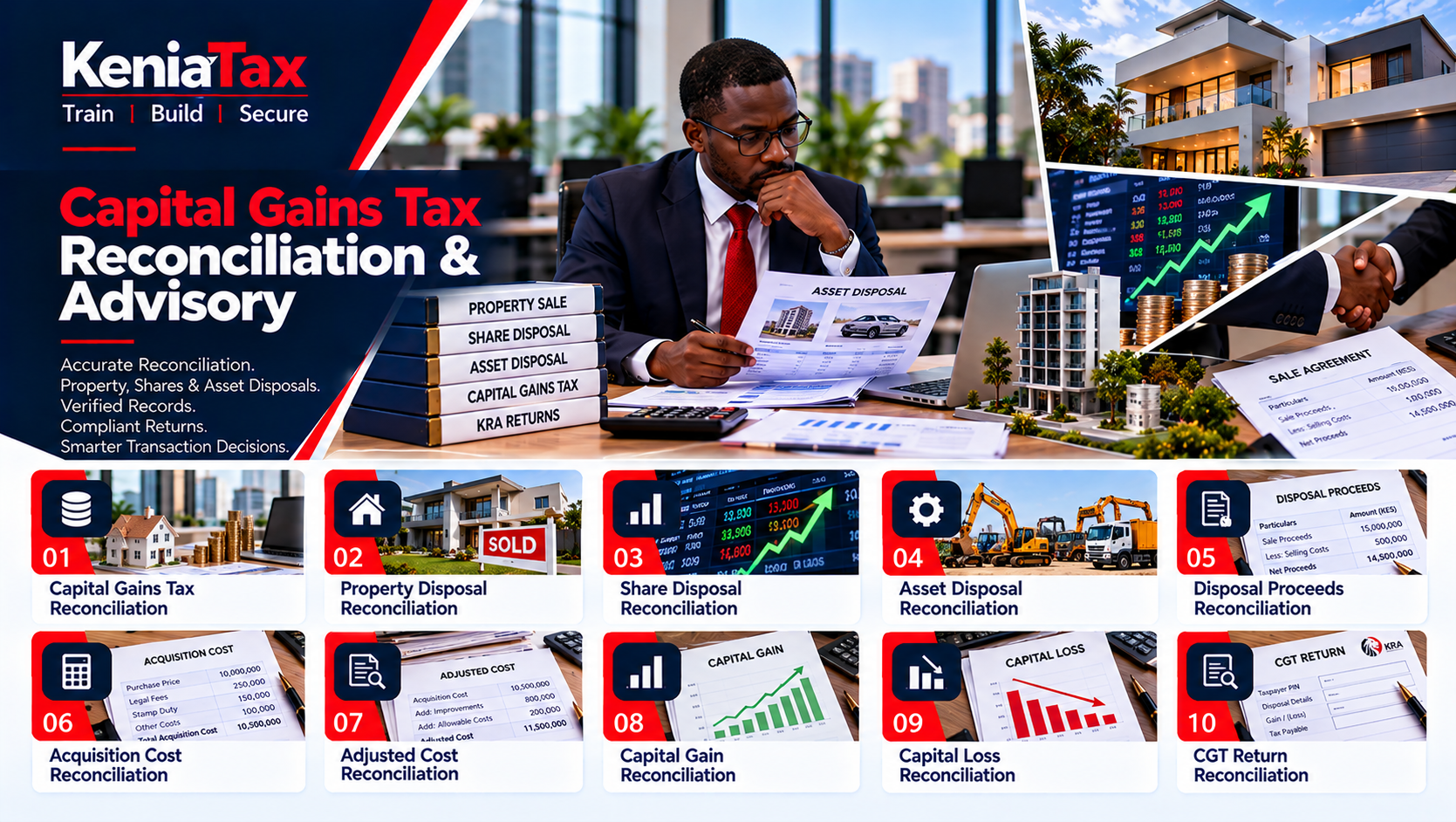
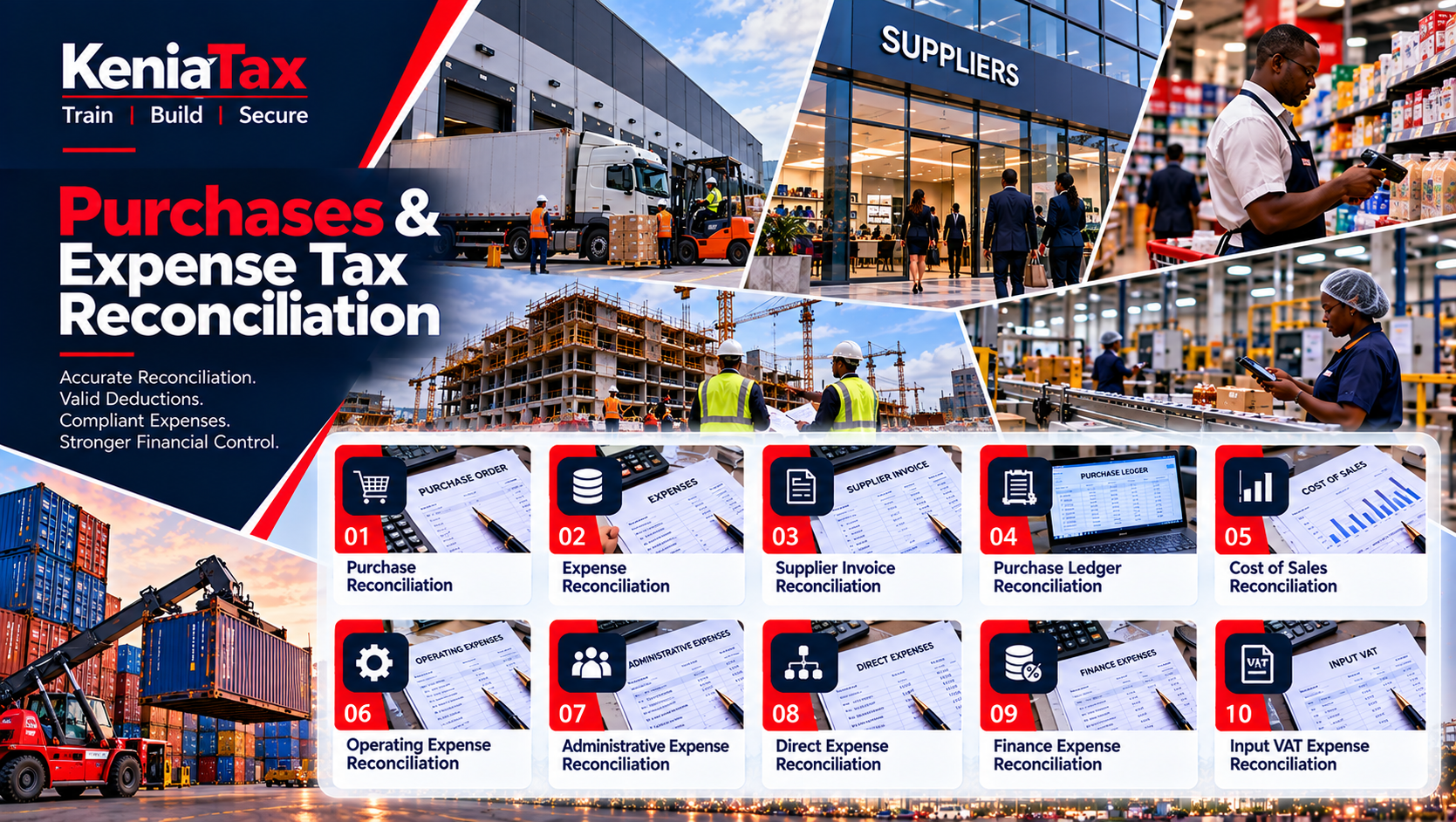
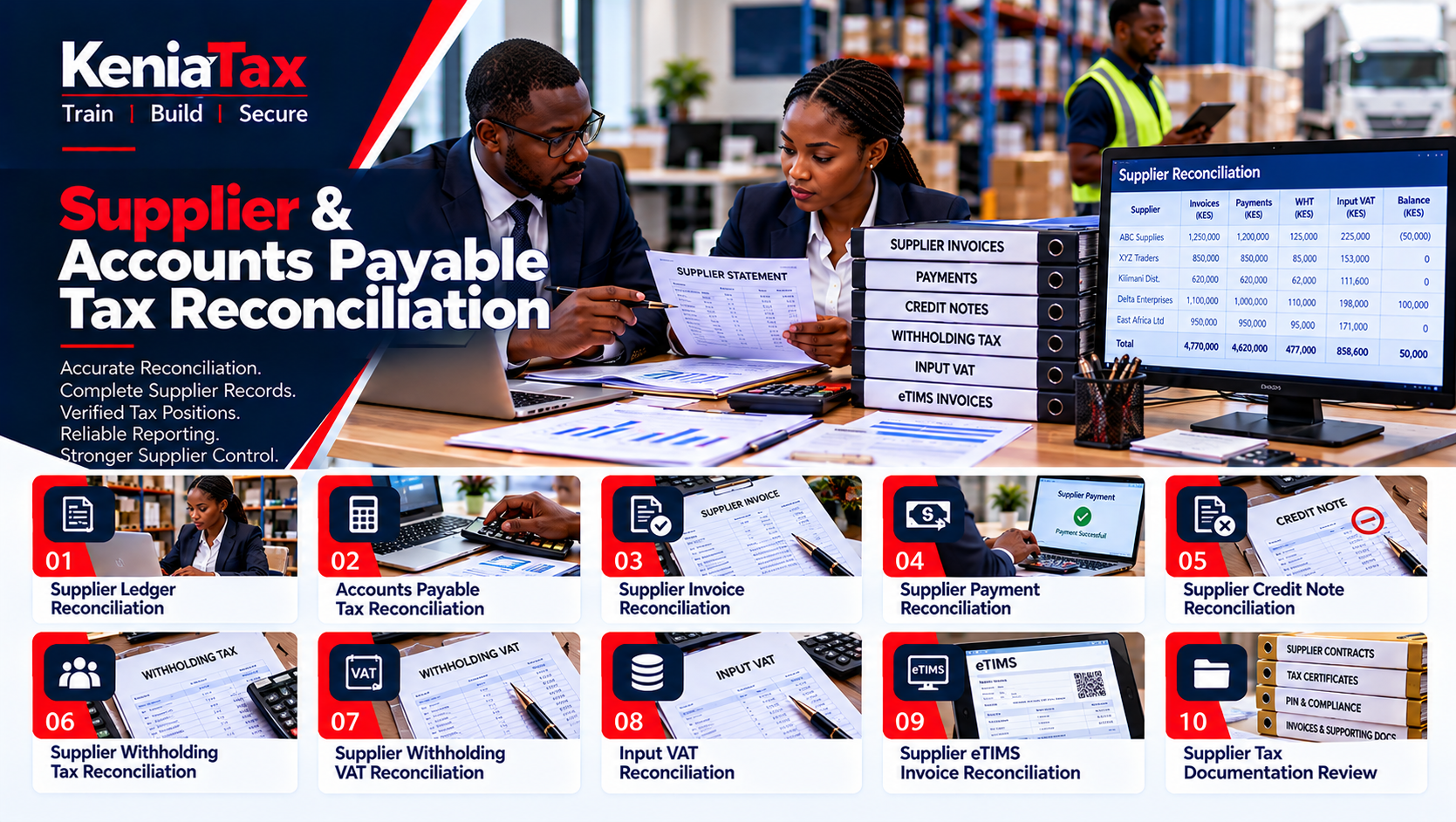
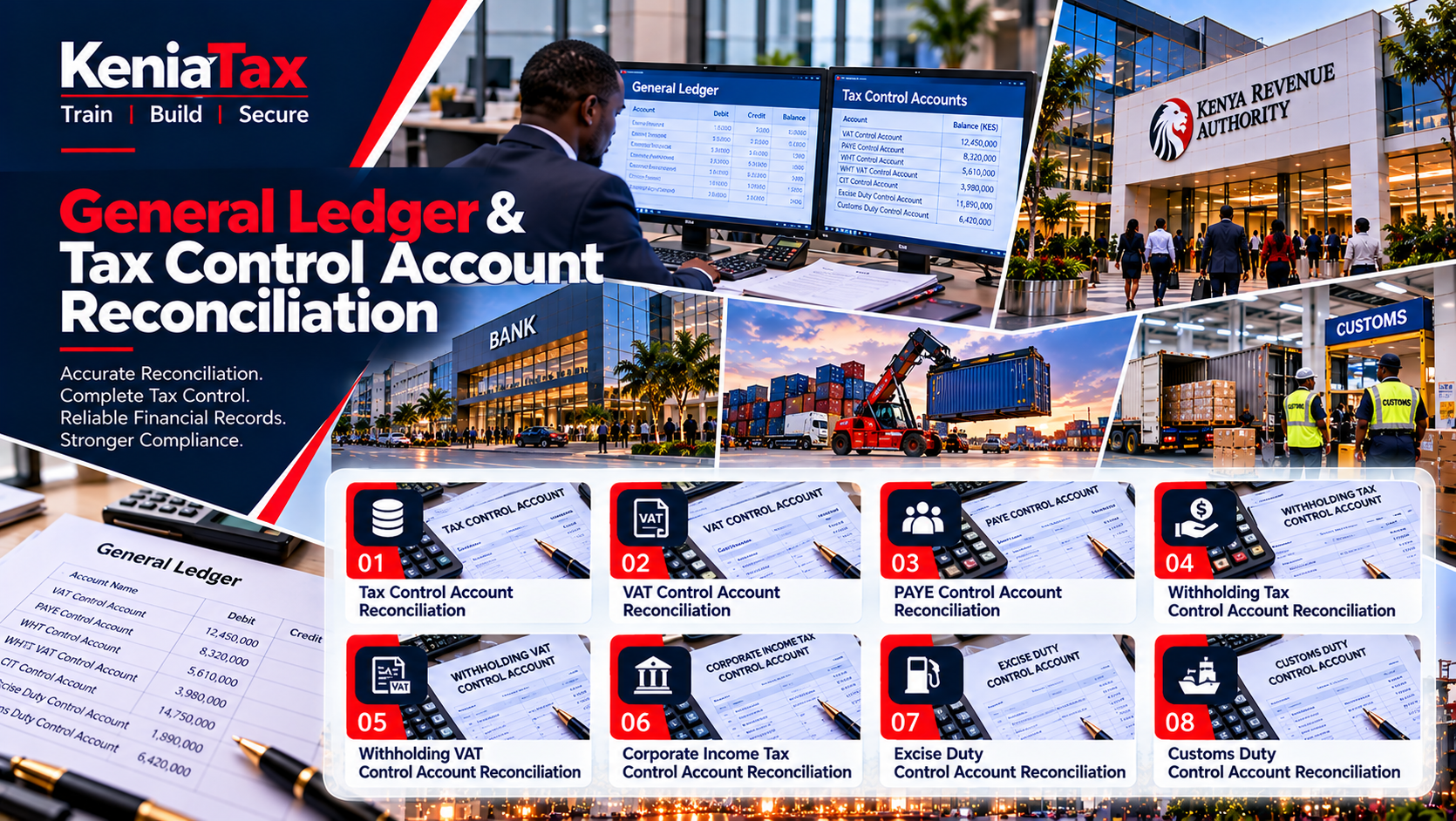
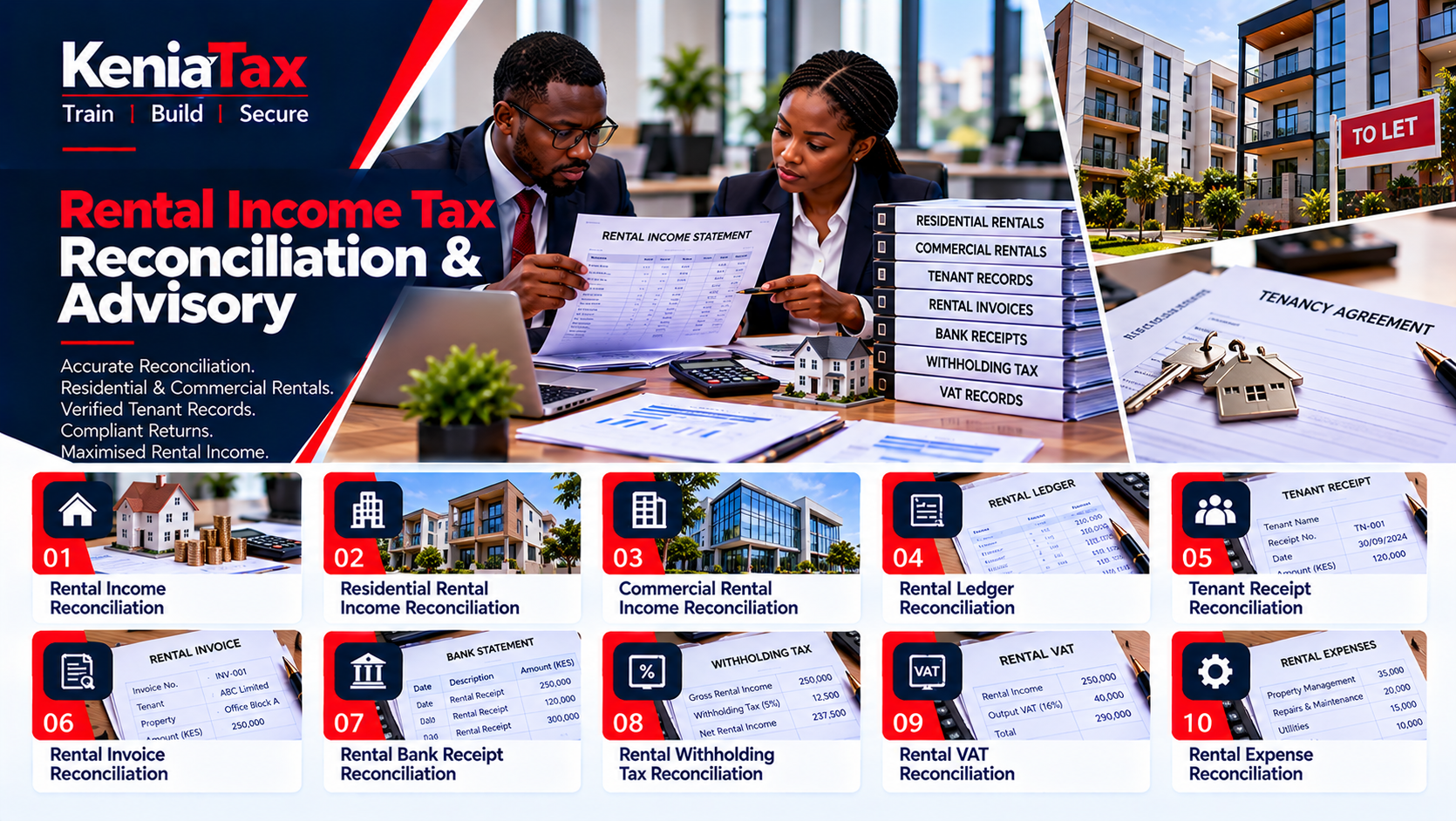
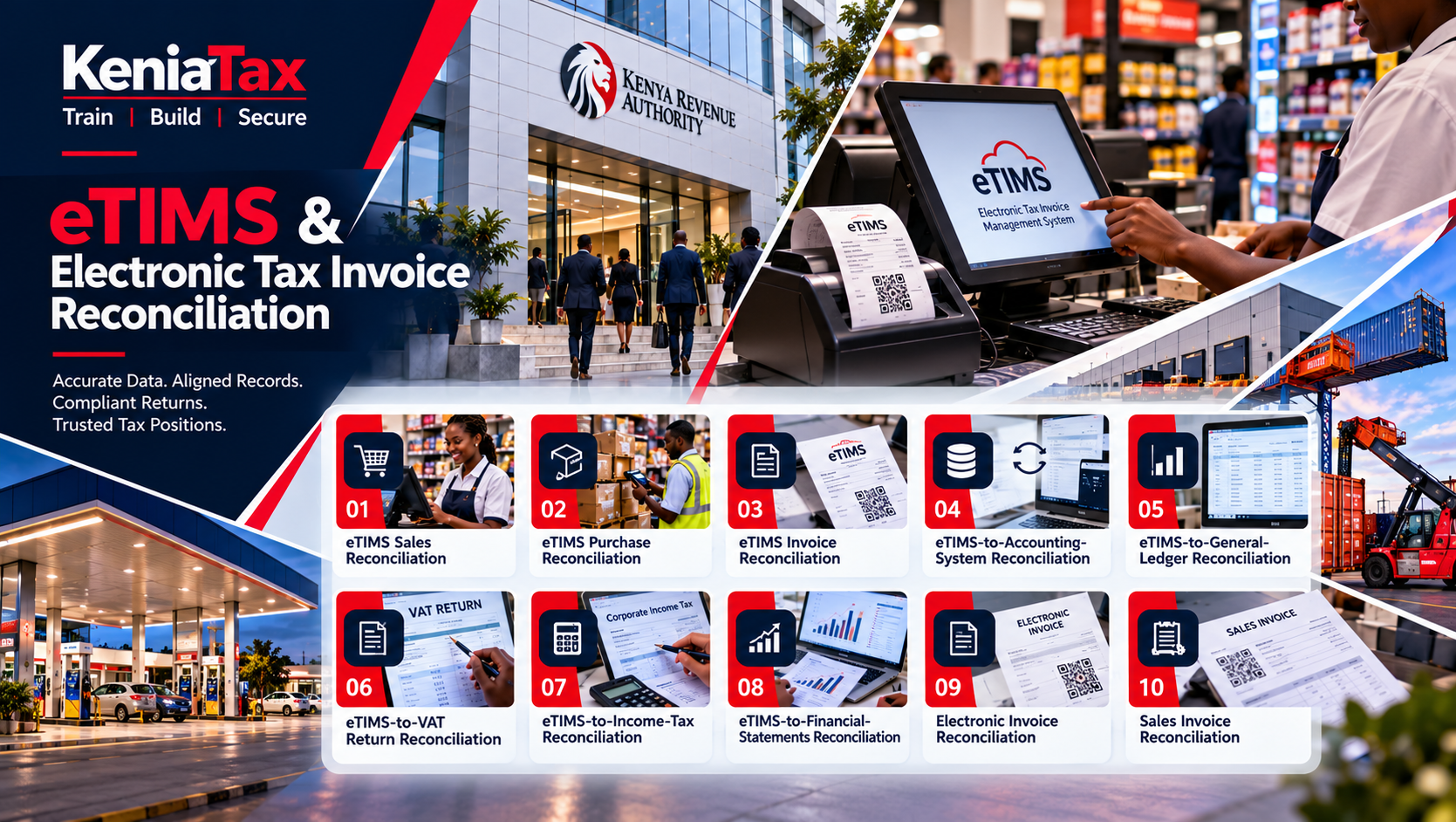
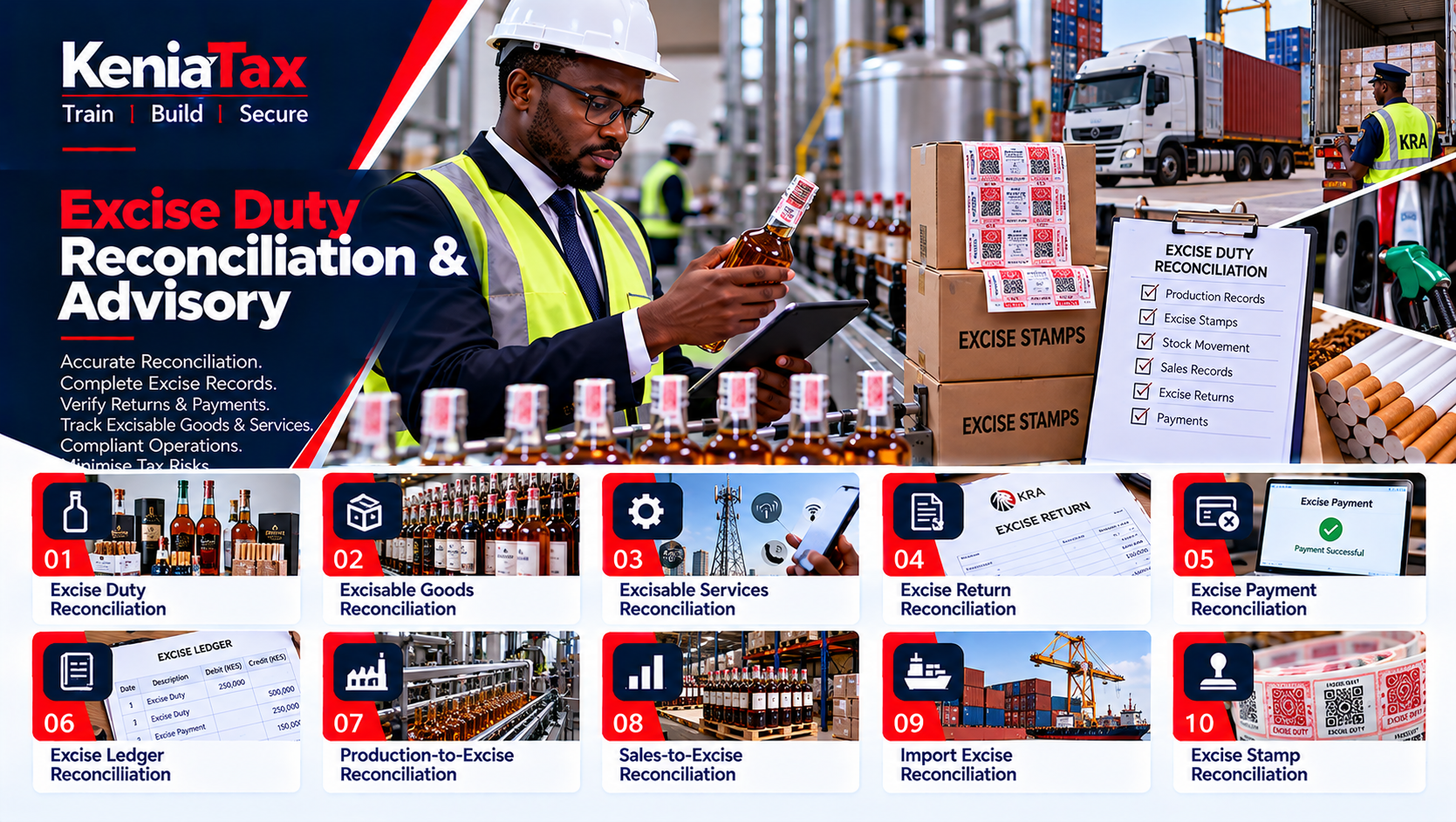
Explore our specialised tax reconciliation programmes. Select a programme to view its practical scope and advisory focus.